The 5 Markers of Quality in Wine - Part 1
The Five Markers of Quality in Wine: Typicity and Cohesion
Buying wine in a commercial environment — whether for a restaurant, bar, pub, club, or wine store — has very little to do with what the wines simply taste or smell like.
Most wine literature and wine writing is concerned with aromas, flavour characteristics, provenance and origin. All of those things matter. They help tell the story of a wine, and they help create interest and engagement.
But when you are buying wine for on-selling to diners or retail customers, there is something even more important to remember: flavour is subjective.
Some people love Sauvignon Blanc and dislike Pinot Noir. Some people love Shiraz and won’t drink white wine at all. Some people want oak, weight and power. Others want freshness, restraint and delicacy.
That is not really about quality. That is about preference.
What is far more consistent across all wines are the true markers of quality. And in a commercial environment, where buying and selling wine is part of a business transaction, recognising those markers is one of the most valuable skills a buyer can develop.
You buy wine at one price, then sell it at another. The difference between those two prices is your margin, or what is often referred to as GP. The greater the GP you can earn on a product, the more profitable your business has the potential to be.
But wine is never measured by price alone. It is measured in terms of price, value, experience and environment.
One of the greatest skills a wine buyer can have is the ability to identify quality at a lower price than expected. That is where real value lives.
One test we used to run in restaurants was to taste wines with the team without anyone knowing what the wines were, how much they cost, or what the business might charge for them. Then we would ask a very simple question:
How much would you pay for this wine?
The answers were often eye-opening.
Very frequently, wines with a high cost price did not receive the most votes as the most popular wine. In fact, they were often downgraded in terms of what people said they would pay for them. At the same time, there were wines with much lower cost prices that people enjoyed immensely, and for which they said they would happily pay a much higher price.
Those wines are gold — both metaphorically and literally.
If you can buy a wine for less and charge more for it without compromising the customer experience, and while still delivering high customer satisfaction, then you are onto a winner. If you can populate your wine list or beverage offering with wines like that, those margins can become a very positive part of your business.
If you want to run this exercise properly, it is worth using simple blind tasting bags or numbered bottle sleeves so the team is not influenced by label, brand, region or price. Removing those clues helps people focus on what is actually in the glass.
So that leads to the question: how do you evaluate quality in wine without relying only on flavour, aroma, backstory or brand?
We work with five markers that are consistent in high-quality wines.
Not necessarily high-cost wines.
High-quality wines.
And if you can find high-quality wines at a lower cost, you are certainly on the way to making more money. That is, after all, why we are in business.
1. Typicity: Being True to Type
The first marker is typicity, or being true to type.
This is probably the marker that crosses over most clearly with aroma and flavour characteristics. If a wine says Pinot Noir on the label, then what you want is for that wine to smell and taste like Pinot Noir.
This is not about whether you personally like Pinot Noir. It is about whether the characteristics you expect Pinot Noir to possess are exhibited in that wine.
The same applies across varieties. Sauvignon Blanc should smell and taste like Sauvignon Blanc. Shiraz should smell and taste like Shiraz. Chardonnay should behave like Chardonnay.
Expectation is a very large part of customer satisfaction.
If someone orders a wine expecting it to smell, taste or feel a particular way, and that expectation is not met, then there is a disconnect. That disconnect creates disappointment, and disappointment becomes a negative part of their experience with you.
So typicity matters.
To understand typicity, you need to understand more about varieties and what the general expectations are for each of them. That information is readily available in books, online resources and flavour wheels. Flavour wheels can be terrific tools for identifying the expected aromas and flavour characteristics of different wines.
A good flavour wheel is one of the simplest training tools for new wine tasters. It gives people a shared language for describing what they are smelling and tasting, and helps move the conversation beyond “I like it” or “I don’t like it”.
How you identify those aromas and flavours is probably a subject for another post but it is not as difficult as it can appear, and it is accessible to everyone with a little mindfulness and a little education.
For now, the important point is this: wines should smell and taste like the grapes named on the label.
2. Cohesion and Integration
The second marker is cohesion, or integration.
By that, we mean that the wine feels well put together. The different aspects of the wine sit comfortably together. There is a unity to it. It presents as a whole, finished product.
That is a strong marker of quality. It is also a strong marker of well-made wine.
A cohesive wine feels as though it has been created by someone who understands how to make wine taste good. And that is an important distinction, because simply making wine does not automatically make someone a good winemaker.
The same is true in every profession. Someone who cuts wood and nails it together is not necessarily a great carpenter. Wine is exactly the same. Just because someone has crushed grapes, let them ferment and made a few decisions along the way does not mean they have made a good wine.
A good winemaker produces a cohesive, typical, compelling liquid from grapes.
Cohesion means the wine feels unified. It has shape and purpose. It does not feel like a collection of separate parts fighting with each other.
At the same time, that unity should not mask the individual components of the wine. A good wine can be harmonious while still showing detail, character and complexity.
Typicity tells us whether a wine is true to what it claims to be.
Cohesion tells us whether the wine feels complete, balanced and well made.
Together, those first two markers already give us a much better way to assess wine quality than simply asking whether we like the flavour.
But they are only the beginning.
To really understand quality in wine, we also need to move beyond smell and taste and pay attention to how the wine feels in the mouth.
That is where structure, length, intensity and power become so important.
We will look at those in Part 2.
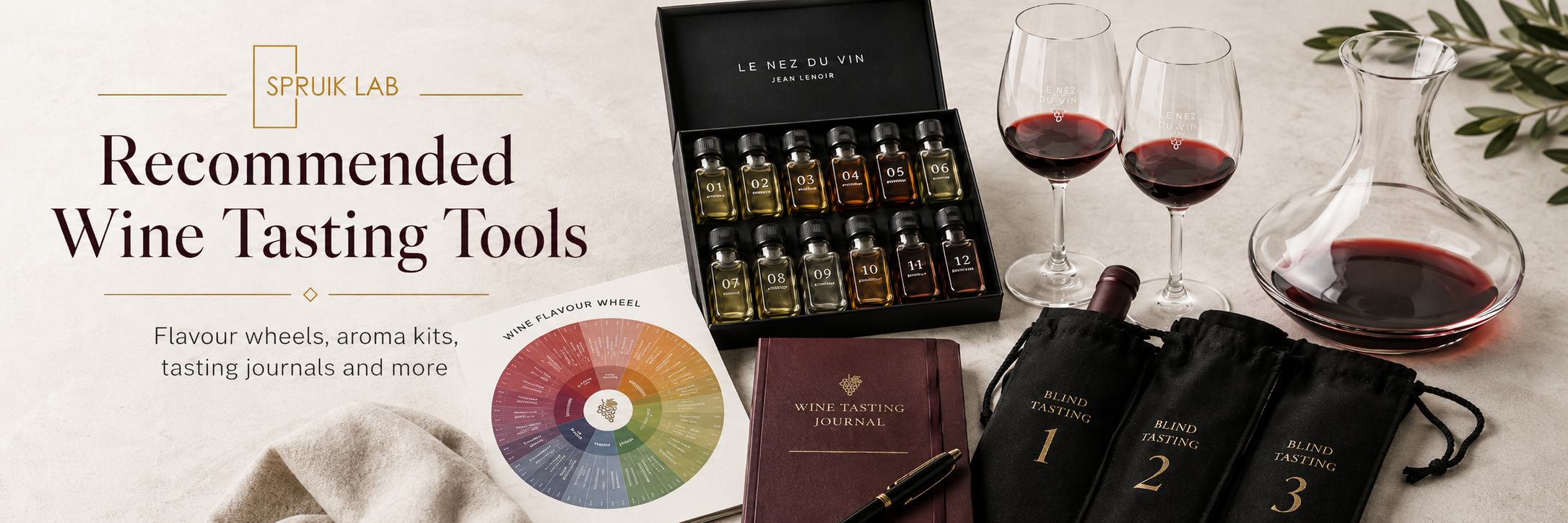
If you are training yourself or a team to assess wine quality more commercially, a few simple tools can make the process easier:
A wine flavour wheel to help build a shared tasting vocabulary.
Blind tasting bags or numbered bottle sleeves to remove label and price bias.
A tasting journal to record impressions, perceived value and team feedback.
A good introductory wine education book to build confidence with varieties, styles and regions.
These tools are not about making wine tasting more complicated. They are about making it more objective, more consistent and more commercially relevant.