The 5 Markers of Quality in Wine - Part 2
The Five Markers of Quality in Wine: Structure, Length and Power
In Part 1, we looked at why flavour alone is not a reliable measure of wine quality.
Flavour is subjective. Some people love Sauvignon Blanc. Others prefer Shiraz, Pinot Noir, Chardonnay or Riesling. That is preference, not quality.
We also looked at the first two markers of quality: typicity and cohesion.
Typicity asks whether the wine is true to type. Does Pinot Noir behave like Pinot Noir? Does Sauvignon Blanc behave like Sauvignon Blanc?
Cohesion asks whether the wine feels complete. Do the different elements sit together comfortably, or does the wine feel awkward, disjointed or unfinished?
In Part 2, we move away from what the wine smells and tastes like, and focus more on what the wine feels like.
That is where structure, length, intensity and power come in.
3. Structure
The third marker is structure.
For a wine to be interesting, it needs to be framed by something. Structure is what gives a wine shape. It is the framework that holds the wine together.
Structure is made up of several elements, but the easiest way to recognise it is by paying attention to acidity and tannin.
These are things we feel rather than taste. They are part of what we would identify as the mouthfeel of a wine.
Tannin is that dryness, that grippiness, and mainly comes from grape skins, grape seeds and sometimes stalks. It creates a texture in the wine. It frames it.
Sometimes tannins are right up front. You feel them on the tip of your tongue, on your gums, or on the inside of your lips. Sometimes they appear in the middle of the palate. Sometimes they sit right at the back of the mouth and down the throat.
Different grapes and different winemaking choices produce different styles of tannin. Those tannins will appear in different parts of the mouth and create very different sensations.
That structure gives the wine interest. It gives the wine depth. It creates a layering effect that makes the wine more engaging. It is no longer just about flavour and aroma. It is about how the wine feels in the mouth.
Acidity works in a similar way.
Think about eating a lemon. You can almost imagine that tingling, sharp tang on the sides of your tongue. Acidity is present in all wines, though some wines are much more acidic than others. Sauvignon Blanc is certainly an acidic wine, and that acidity is part of its enduring popularity.
Sometimes acidity is zippy, tart and obvious on the sides of the tongue. Sometimes it sits more towards the front. Sometimes it feels all-enveloping.
But simply feeling acidity does not make a wine high quality. Feeling tannin does not automatically mark quality either.
Quality begins to show when tannin and acidity sit in balance with flavour and aroma. When they feel unified. When nothing is jarring. Nothing sticks out. Nothing feels as though it does not belong. Nothing overwhelms everything else to the detriment of the wine.
Everything is available for you to experience, but everything also contributes to an overall sense of cohesion.
Now we are starting to see a wine that sings its quality.
If you are training yourself or your team to assess structure properly, use consistent glassware. Changing glass shapes from wine to wine can make it harder to compare acidity, tannin and length accurately.
Decanting can also help when assessing young, tannic red wines, as oxygen can soften the way tannins present and make the structure easier to read.
4. Length
The fourth marker is something that is often discussed, but not always paid attention to beyond the first moment. That marker is length.
Length is about how long the flavour lasts in your mouth, and how much of your mouth experiences those flavours.
Imagine taking a mouthful of wine, giving it a swirl, drawing in a little oxygen to help release the flavours and aromas, and then swallowing. You might experience flavour at the front of the tongue, through the middle of the palate, at the back of the mouth and even down the throat.
Then, after you have swallowed, the wine remains.
There is a residue, a ghost of the wine, still moving across your palate. You are still enjoying it long after the wine itself has gone.
The longer that enjoyment lasts, the longer the palate of the wine.
A wine with great length does not simply appear and disappear. It does not give you a flash of flavour and then vanish. It continues. It persists. It holds your attention.
That is a clear marker of quality.
Length also refers to how much of the palate is involved in the experience. Sometimes a wine gives you flavour at the beginning, then seems to disappear through the middle. People sometimes talk about the “donut hole” of Cabernet, where the flavour is present at the front, vanishes in the middle, and may or may not reappear at the back.
In cheaper wines, the experience can be very brief. There is flavour up front, then very little else. In order to keep enjoying the wine, you need to take another mouthful because there is no real length. No persistence. No maintained experience.
Good length, then, is one of the great markers of high-quality wine.
Length is also one of the easiest markers to forget unless you write it down. A simple tasting notebook helps you record whether a wine disappeared quickly or continued to develop after swallowing.
5. Intensity and Power
The final marker is closely connected to length, but it is also its own thing: intensity, or power.
This is about how intense the flavours are and how powerful the experience is in the mouth.
Power does not always mean obvious force. It is not always about ramped-up flavour that overwhelms you. Sometimes power is about persistence and a long palate delivered with subtlety.
Great Pinot Noir is a perfect example. Its power is not an explosion in the mouth. It is more about persistence. It is about attractive, interesting, complex flavours that remain with you long after you have swallowed the wine.
Shiraz, particularly from warmer climates, can be more about brute force: ripeness, richness, sugar, flavour, tannin and weight. But even then, that power needs to be tempered by elegance. It needs structure. It needs balance. It needs harmony.
A powerful wine should allow you to enjoy its intensity without being overwhelmed by it. It should not mask the flavours of food. It should not be one-dimensional. It should still allow you to experience the tannins, the acidity, the fruit, the savoury notes and the individual characteristics of the wine.
Power, when it is part of quality, is not just about size. It is about presence. It is about persistence. It is about the wine holding your attention without shouting over everything else.
Aroma kits can be useful for training, not because every wine should smell like a neat laboratory sample, but because they help tasters build confidence in recognising fruit, spice, floral, earthy and savoury characters.
How to Use These Markers
So when tasting wine, start looking for these markers.
Look for typicity. Does the wine taste and feel true to what it is supposed to be?
Look for structure. What is the acid structure like? What is the tannin structure like? Do they sit harmoniously together, or do they dominate the wine?
Look for cohesion. Do the flavours, aromas, tannins and acids feel as though they belong together?
Look for length. Are the flavours persistent? Do they last? Does the wine continue across the palate after you have swallowed?
Look for intensity and power. Is the wine expressive? Does it offer depth and presence? Does it allow you to participate in the experience in an accessible and interesting way?
These markers are part and parcel of recognising quality in wine.
And commercially, this is where the opportunity lies.
If you can find a wine that is cohesive, structured, long, intense, powerful and true to type — and you can buy that wine for less than its quality suggests — then you have found value.
That is the skill.
That is the secret to improving wine list profitability: not simply buying what tastes good, but learning to recognise what quality looks like, what value looks like, and where the gap between price and quality gives you room to move.
The less you pay for genuine quality, the more confidently you can charge for it.
And that is how understanding quality helps you build a better, more profitable wine list.
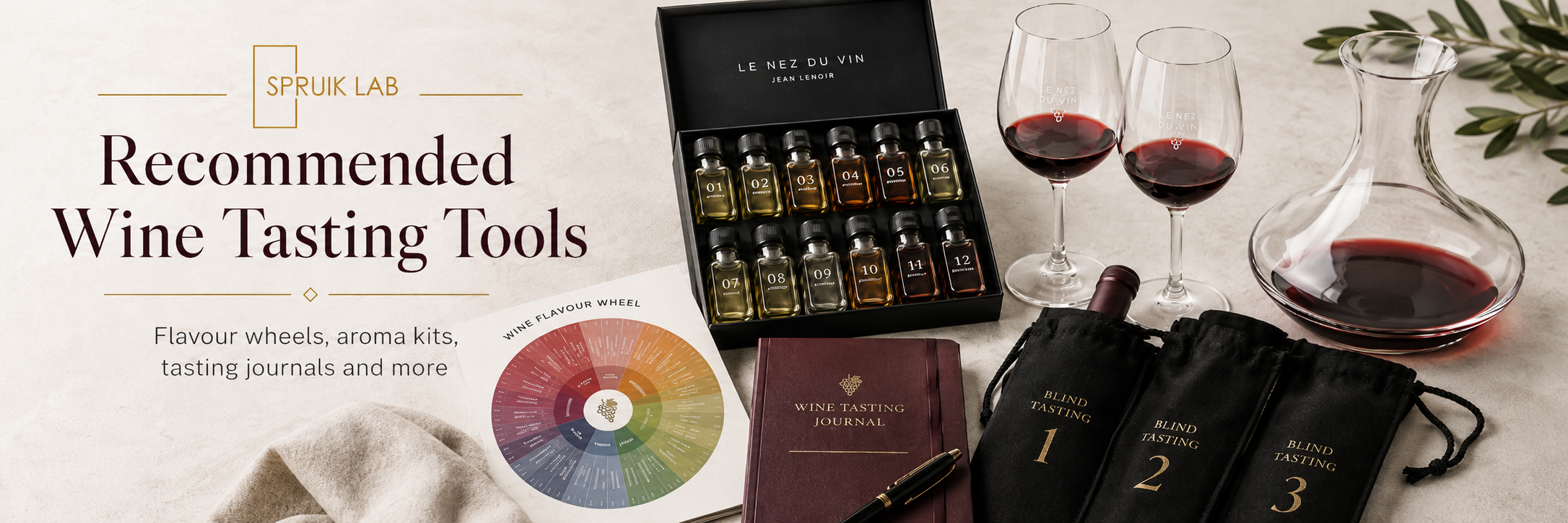
Recommended tools for Part 2
If you want to make wine assessment more consistent, these tools are useful:
Consistent tasting glasses to compare wines fairly.
A simple decanter for assessing young or tannic red wines.
A tasting notebook or scorecard to record length, structure and persistence.
An aroma kit to help build recognition and tasting vocabulary.
A spittoon or tasting vessel for professional tasting sessions.
The aim is not to turn wine tasting into theatre but to give yourself a repeatable way to assess quality, value and commercial usefulness.